
🇲🇲 Religion in Myanmar: Buddhism, Pagodas & Daily Life
Religion plays a central role in Myanmar’s identity. From golden pagodas that dominate city skylines to monks walking barefoot at dawn, spirituality is woven into daily life across the country.
While Myanmar is religiously diverse, Theravada Buddhism is the dominant faith, shaping the nation’s culture, traditions, architecture, festivals, and social values.
For travelers, understanding religion in Myanmar adds deeper meaning to visits to temples, pagodas, and festivals. This guide explores:
- Buddhism in Myanmar
- The role of pagodas
- Daily religious practices
- Monastic life
- Religious diversity
- Cultural etiquette for visitors
🛕 The Role of Buddhism in Myanmar
Approximately 85–90% of Myanmar’s population practices Theravada Buddhism, the same branch found in Thailand, Sri Lanka, and Laos.
Buddhism in Myanmar emphasizes:
- Meditation
- Merit-making
- Respect for monks
- Observance of moral precepts
- Generosity
Religion is not confined to temples. It influences daily decisions, community life, and even architecture.
In many towns, the most prominent structure is a pagoda — not a skyscraper.
🏯 What Is Theravada Buddhism?
Theravada Buddhism is one of the oldest forms of Buddhism, based on the teachings of the historical Buddha.
Core beliefs include:
- The Four Noble Truths
- The Eightfold Path
- Karma and rebirth
- The pursuit of enlightenment
Monks play a vital role as spiritual teachers and role models.
🌟 Pagodas: Myanmar’s Golden Landmarks
Myanmar is often called the “Land of a Thousand Pagodas.”
Pagodas (also known as stupas) are sacred Buddhist structures that often contain relics of the Buddha or revered monks.
They serve as:
- Places of worship
- Community gathering spaces
- Sites for festivals
- Symbols of national pride
🕌 Shwedagon Pagoda (Yangon)
The most famous pagoda in Myanmar, Shwedagon rises above Yangon with its gold-covered stupa.
Believed to enshrine sacred relics of the Buddha, it is one of the most important religious sites in Southeast Asia.
(Internal link: Yangon Travel Guide)
🏛️ Bagan’s Temple Plains
Bagan is home to over 2,000 surviving temples and pagodas built between the 9th and 13th centuries.
Each structure reflects devotion and artistic expression.
(Internal link: Bagan Travel Guide)
🌊 Pagodas on Inle Lake
Even floating villages have monasteries and pagodas built on stilts above the water.
Religion extends into every corner of life.
(Internal link: Inle Lake Travel Guide)
🙏 Daily Religious Practices
Religion in Myanmar is visible every day.
🌅 Morning Alms Giving
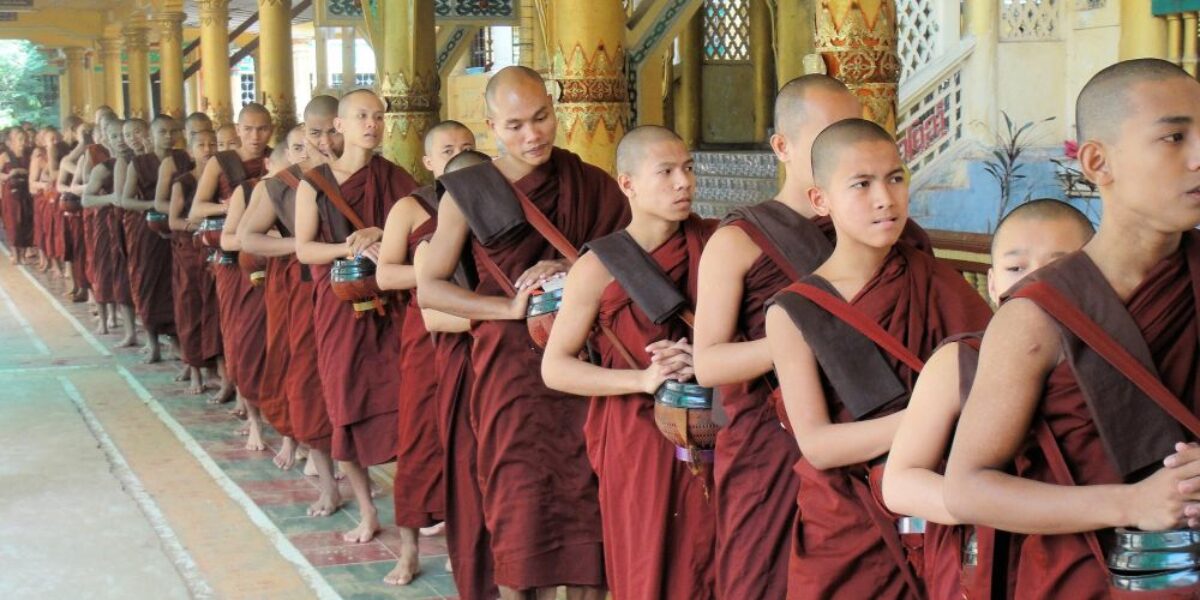
At dawn, monks walk barefoot through neighborhoods collecting food offerings.
Locals place rice and dishes into monks’ bowls as a way of making merit.
This quiet ritual reflects humility and generosity.
🪔 Visiting Pagodas
Many people visit pagodas weekly, lighting candles and offering flowers.
Common offerings include:
- Water
- Incense
- Gold leaf
- Fresh flowers
Pagoda visits are both spiritual and social.
🧘 Meditation & Merit
Meditation is an important part of Burmese Buddhism.
Myanmar is known globally for:
- Vipassana meditation centers
- Silent retreats
- Monastic study
Making merit (good deeds to improve karma) includes:
- Donating to monasteries
- Supporting monks
- Feeding the poor
- Funding pagoda renovations
👘 Monastic Life in Myanmar
Monks (bhikkhus) and nuns (thilashin) are respected members of society.
It is common for:
- Young boys to become novice monks temporarily
- Families to sponsor ordination ceremonies
Monasteries serve as:
- Schools
- Spiritual centers
- Community hubs
🎎 Religious Festivals
Religion and festivals are deeply connected.
Major religious celebrations include:
- Thingyan (New Year purification)
- Thadingyut (Festival of Lights)
- Tazaungdaing
- Pagoda festivals in Bagan and Mandalay
(Internal link: Myanmar Festivals Guide)
🕊️ Religious Diversity in Myanmar
While Buddhism is dominant, Myanmar is also home to:
- Christianity (particularly among ethnic minorities)
- Islam
- Hinduism
- Animist traditions
Ethnic communities often blend Buddhist practices with older local beliefs.
🌿 Nat Worship: Spirit Beliefs
In addition to Buddhism, many Burmese people honor nats, or local spirits.
Nat shrines can be found near homes and pagodas.
This blend of Buddhism and spirit worship reflects Myanmar’s layered spiritual history.
📸 Architecture & Religious Art
Religion influences Myanmar’s architecture:
- Golden stupas
- Intricate carvings
- Buddha statues in various poses
- Monasteries made of teak wood
Each statue position represents different aspects of Buddha’s life.
🛡️ Etiquette for Travelers
Understanding religious customs enhances your experience.
✔ Remove shoes at temples
✔ Dress modestly (cover shoulders and knees)
✔ Avoid touching monks
✔ Do not point feet at Buddha statues
✔ Speak quietly inside pagodas
Respect is highly valued.
💰 Donations & Contributions
Pagodas rely on donations for maintenance.
Small contributions are appreciated but not required.
Always donate respectfully.
🏞️ Religion in Rural vs Urban Areas
In rural areas:
- Religious life may be more traditional
- Pagoda festivals are community-centered
In cities:
- Modern lifestyles coexist with religious devotion
- Large pagodas remain central gathering places
🌟 Why Religion Shapes Myanmar Identity
Religion influences:
- Education
- Festivals
- Social norms
- Family traditions
- Architecture
- Moral values
For many Burmese people, faith provides stability, guidance, and hope.
📅 Best Time to Experience Religious Culture
October (Thadingyut) and January (pagoda festivals) offer stunning religious celebrations.
Early morning visits provide the most peaceful atmosphere.
(Internal link: Best Time to Visit Myanmar)
🧳 Practical Travel Tips
✔ Visit pagodas at sunrise or sunset
✔ Carry socks if temple floors are hot
✔ Bring small change for donations
✔ Respect photography rules
🌏 Why Religion Matters for Visitors
Understanding religion in Myanmar helps you:
- Appreciate temple architecture
- Interpret festivals
- Connect respectfully with locals
- Avoid cultural misunderstandings
It turns sightseeing into meaningful cultural immersion.
❓ Frequently Asked Questions
1. What is the main religion in Myanmar?
Theravada Buddhism is the dominant religion.
2. Can tourists visit pagodas?
Yes, most are open to visitors with modest dress.
3. Do Burmese people practice other religions?
Yes, including Christianity, Islam, Hinduism, and traditional beliefs.
4. Why are pagodas covered in gold?
Gold symbolizes devotion and reverence for the Buddha.
5. Is it okay to photograph monks?
Ask permission first and be respectful.
6. What is merit-making?
Performing good deeds to improve karma and spiritual well-being.
✨ Final Thoughts
Religion in Myanmar is not just something you observe — it’s something you feel. From shimmering golden pagodas to the quiet rhythm of morning alms, spirituality shapes everyday life.
For travelers, understanding Buddhism and religious customs transforms a simple temple visit into a profound cultural experience.
Myanmar’s faith, traditions, and devotion are part of what make the country truly unforgettable.