

🇲🇲 Bagan Travel Guide: Temples, Hot Air Balloons & History
Bagan is one of Southeast Asia’s most breathtaking archaeological wonders. With over 2,000 ancient temples and pagodas scattered across a vast plain along the Ayeyarwady River, Bagan feels like stepping into a living museum.
Once the capital of the Pagan Kingdom between the 9th and 13th centuries, Bagan remains Myanmar’s most iconic destination — famous for sunrise temple views, mystical hot air balloons, and centuries of Buddhist history.
If you’re planning a trip, this complete Bagan travel guide covers everything you need to know.
🏛️ A Brief History of Bagan
Bagan flourished between 1044 and 1287 AD under King Anawrahta and his successors. At its height, the city was home to more than 10,000 Buddhist temples, monasteries, and stupas.
Although earthquakes and time have reduced that number, over 2,000 structures remain today — creating one of the world’s greatest archaeological landscapes.
Bagan became a UNESCO World Heritage Site in 2019, recognizing its immense cultural and historical value.
✨ Top Things to Do in Bagan
🌅 1. Watch Sunrise Over the Temples
Sunrise in Bagan is magical. As mist rises over the plains and golden light touches ancient spires, the scene feels almost unreal.
Best viewpoints:
- Designated viewing hills
- Select temples (where permitted)
Arrive early — at least 30 minutes before sunrise.
🎈 2. Take a Hot Air Balloon Ride
One of the most unforgettable experiences in Myanmar is floating above Bagan in a hot air balloon.
What to Expect:
- Early morning departure
- 45–60 minutes in the air
- Panoramic views of temples and river
Cost: Premium experience ($300+), but widely considered worth it.
Balloon season runs during the cool dry months (typically November to February).
🕌 3. Explore the Most Famous Temples
With thousands of temples, knowing where to start helps.
Ananda Temple
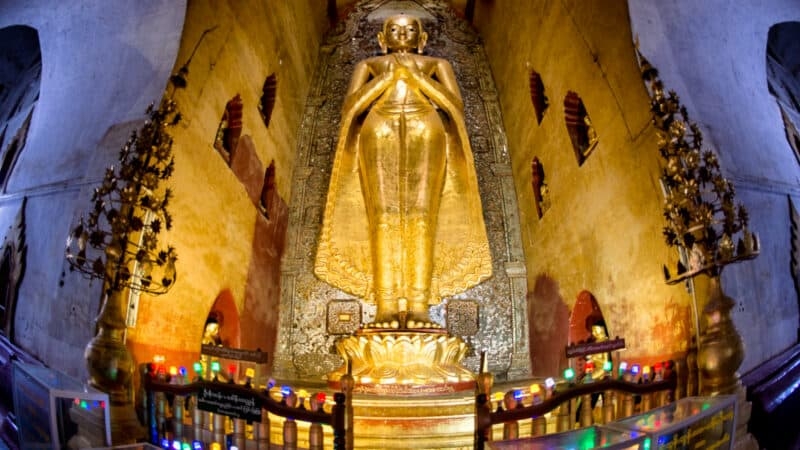
Often considered Bagan’s most beautiful temple. Known for its symmetrical design and towering Buddha statues.
Dhammayangyi Temple
The largest temple in Bagan, famous for its mysterious history.
Shwezigon Pagoda
An important religious site with a stunning golden stupa.
Thatbyinnyu Temple
The tallest temple in Bagan.
Each temple offers unique architecture and artistic detail.
🚲 4. Explore by E-Bike
The best way to explore Bagan is by electric bike.
- Cost: $5–$10 per day
- Easy to use
- Ideal for covering large distances
Roads are mostly sandy — ride carefully and wear sunscreen.
🌄 5. Sunset Viewing
Sunset rivals sunrise in beauty.
Top tips:
- Avoid overcrowded spots
- Respect temple restrictions
- Bring water and a hat
Watching the sun dip behind temple silhouettes is unforgettable.
📍 Old Bagan vs New Bagan vs Nyaung U
Bagan is divided into three main areas.
🏛️ Old Bagan
Closest to the major temples. Higher-end hotels and heritage atmosphere.
🏘️ New Bagan
More affordable accommodations and restaurants.
🛍️ Nyaung U
Budget-friendly guesthouses and local markets.
Most travelers stay in Nyaung U or New Bagan for better value.
🍜 What to Eat in Bagan
Bagan offers both traditional Burmese cuisine and international options.
Must-Try Dishes
- Mohinga (fish noodle soup)
- Shan noodles
- Burmese curry sets
- Tea leaf salad
Local restaurants are affordable, with meals ranging from $3–$7.
Sunset riverside dining is especially popular.
🏨 Where to Stay in Bagan
Budget ($15–$30)
Guesthouses in Nyaung U.
Mid-Range ($40–$80)
Boutique hotels with pool access.
Luxury ($100–$250+)
Riverside resorts and heritage-style hotels.
Book early during peak season.
📅 Best Time to Visit Bagan
Bagan’s weather follows Myanmar’s three-season pattern.
Cool & Dry (Nov–Feb)
Best time to visit. Pleasant temperatures and balloon flights operate.
Hot Season (Mar–May)
Very hot — can exceed 40°C (104°F).
Rainy Season (Jun–Oct)
Lush scenery, fewer tourists, but muddy roads.
Most visitors prefer November to February.
(Internally link to your Best Time to Visit Myanmar page.)
💰 Entrance Fees & Costs
Bagan Archaeological Zone Fee:
Approximately $15–$25 for multi-day access.
E-bike rental:
$5–$10 per day.
Hot air balloon:
Premium cost, varies by provider.
Bagan remains affordable compared to many UNESCO sites worldwide.
📸 Photography Tips
✔ Shoot during golden hour
✔ Use wide-angle lens for temple views
✔ Respect religious practices
✔ Avoid drone use without permission
Morning mist creates the most dramatic images.
🛡️ Is Bagan Safe?
Bagan is considered one of Myanmar’s safest tourist destinations.
✔ Low violent crime
✔ Friendly locals
✔ Well-patrolled tourist areas
Standard precautions apply.
(Link internally to your safety article.)
🧳 Practical Travel Tips
✔ Bring cash — ATMs available but limited
✔ Dress modestly inside temples
✔ Remove shoes before entering temples
✔ Carry water — limited shade
✔ Wear sun protection
🚗 How to Get to Bagan
✈️ By Air
Nyaung U Airport connects to Yangon and Mandalay.
🚌 By Bus
Overnight VIP buses available.
🚆 By Train
Scenic but slow.
🏺 Cultural Etiquette
Temples are active religious sites.
✔ Remove shoes
✔ Cover shoulders and knees
✔ Avoid climbing restricted temples
✔ Be quiet and respectful
Respecting these rules preserves Bagan’s heritage.
📆 Suggested 3-Day Itinerary
Day 1
- Sunrise viewpoint
- Ananda Temple
- Shwezigon Pagoda
- Sunset riverside dinner
Day 2
- Balloon ride
- Dhammayangyi Temple
- E-bike countryside exploration
- Sunset hill
Day 3
- Local market visit
- Lesser-known temples
- Relax at hotel pool
🌟 Why Bagan Is Special
Unlike Angkor Wat or Borobudur, Bagan’s temples stretch endlessly across open plains — giving a sense of solitude and scale rarely found elsewhere.
It’s not just a sightseeing destination. It’s a spiritual landscape shaped by devotion and centuries of history.
❓ Frequently Asked Questions
1. How many days do I need in Bagan?
Two to three days allow you to explore major temples and enjoy sunrise and sunset views.
2. Is the hot air balloon worth it?
Yes — it’s one of Southeast Asia’s most iconic experiences.
3. Can I climb temples in Bagan?
Most temple climbing is now restricted to preserve the site. Use designated viewpoints.
4. What is the best way to explore Bagan?
E-bikes are the most convenient and affordable option.
5. Is Bagan suitable for families?
Yes, but prepare for heat and walking.
6. When is balloon season?
Generally November through February during the cool dry season.
✨ Final Thoughts
Bagan is more than a tourist attraction — it’s one of the world’s great sacred landscapes. Whether you’re watching sunrise from a quiet temple or floating silently above the plains in a hot air balloon, Bagan delivers unforgettable memories.
For many travelers, Bagan becomes the highlight of their Myanmar journey.