

🇲🇲 Mohinga: Myanmar’s National Dish Explained
When people ask, “What is the national dish of Myanmar?” the answer is almost always the same: mohinga.
More than just a meal, mohinga represents Myanmar’s culinary identity. It’s eaten at dawn in busy city streets, served in quiet rural villages, and enjoyed by families across the country. From roadside stalls in Yangon to morning markets in Mandalay, this fragrant fish noodle soup is a daily ritual for millions.
If you want to understand Myanmar through food, start with mohinga.
This guide explains:
- What mohinga is
- Its history and cultural significance
- Key ingredients
- How it’s made
- Regional variations
- Where to try it
- Tips for travelers
🍜 What Is Mohinga?
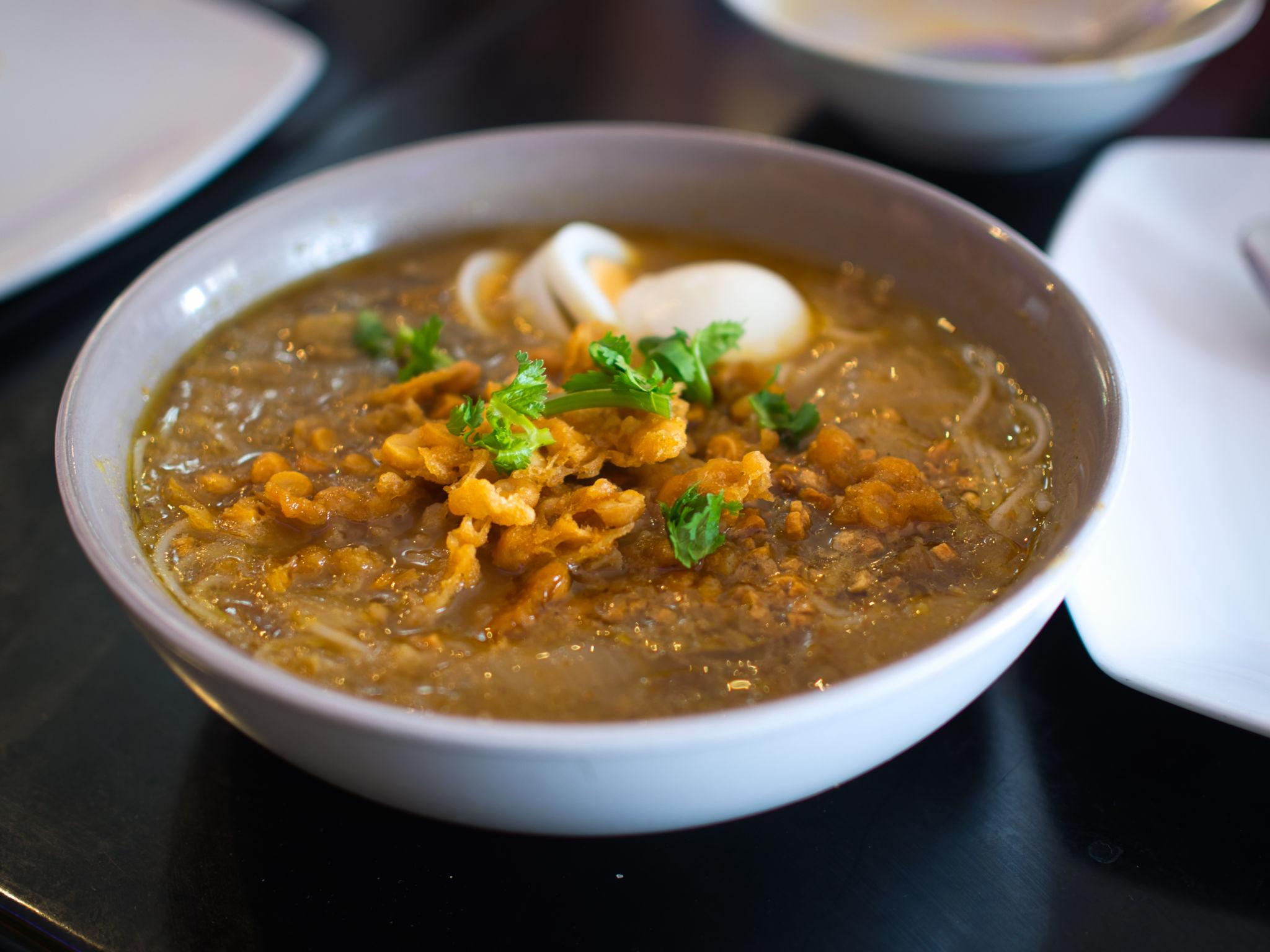
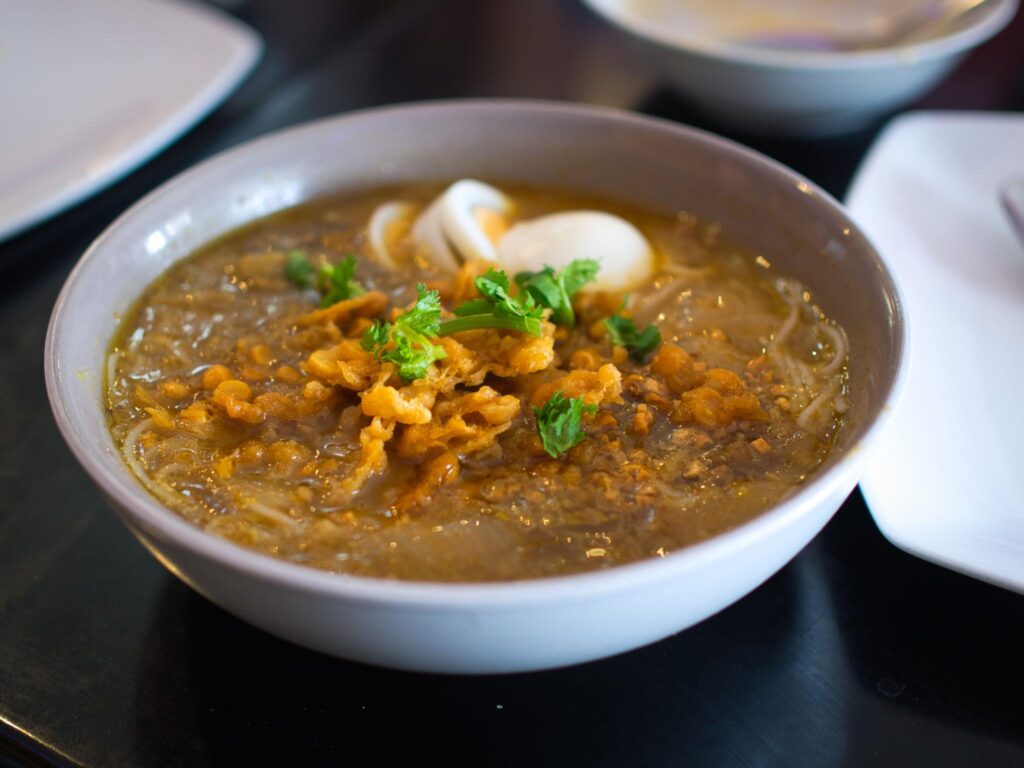
Mohinga is a savory rice noodle soup made with fish-based broth, flavored with herbs and thickened with rice flour or chickpea flour.
It typically includes:
- Rice noodles
- Fish broth (usually catfish)
- Lemongrass
- Banana stem
- Garlic and onions
- Turmeric
- Boiled egg
- Crispy fritters
- Fresh coriander
The result is a deeply comforting, aromatic dish — light yet flavorful.
Unlike many Southeast Asian soups, mohinga is usually eaten for breakfast, though it’s available all day.
🏺 The History of Mohinga
Mohinga’s origins trace back centuries, though exact historical records are limited. Many believe it developed along river communities where freshwater fish were abundant.
Fish has always been central to Burmese cuisine due to the country’s extensive river systems, including the Ayeyarwady River. Combining fish broth with rice noodles created a filling, affordable meal suitable for working families.
Over time, mohinga became a unifying national dish — enjoyed by people from all ethnic backgrounds.
Today, it is deeply woven into Myanmar’s food culture.
🌅 Why Mohinga Is a Breakfast Tradition
In Myanmar, mornings begin early.
Street vendors start preparing mohinga before sunrise. Large metal pots simmer with fragrant broth as workers, students, monks, and families gather for breakfast.
Why breakfast?
- It’s warm and energizing
- It’s affordable
- It’s quick to serve
- It’s filling without being heavy
A bowl of mohinga paired with sweet Burmese tea is the perfect start to the day.
🥣 Key Ingredients Explained
🐟 Fish Broth
Traditionally made from freshwater fish such as catfish. The fish is boiled, deboned, and flaked into the soup.
The broth provides depth and umami flavor.
🌿 Lemongrass
Adds brightness and fragrance. It balances the richness of the fish.
🌱 Banana Stem
One of mohinga’s most unique ingredients. Thinly sliced banana stem gives texture and subtle flavor.
🧄 Garlic & Onions
Fried garlic and onions create a savory base.
🌾 Rice Noodles
Soft, round rice noodles soak up the broth beautifully.
🥚 Boiled Egg
Half a boiled egg is often added for extra richness.
🧆 Crispy Fritters
Deep-fried chickpea fritters add crunch and contrast.
🍲 How Mohinga Is Made
While recipes vary slightly, the general process includes:
- Boiling fish to create broth
- Flaking fish into small pieces
- Adding lemongrass, turmeric, garlic, and onions
- Thickening broth with rice or chickpea flour
- Preparing fresh rice noodles
- Assembling bowl with toppings
The broth must simmer for hours to develop proper flavor.
Despite its complexity, mohinga is remarkably affordable.
🌍 Regional Variations of Mohinga
Different regions in Myanmar have their own style.
🏙️ Yangon Style
- Slightly sweeter
- Richer broth
- Generous toppings
🏔️ Mandalay Style
- Lighter broth
- Less oily
- Simpler presentation
🌊 Rakhine Style
- Spicier
- Stronger fish flavor
Each version reflects local taste preferences.
💰 How Much Does Mohinga Cost?
One of the best things about mohinga is its affordability.
Street stall: $1–$2
Local restaurant: $2–$4
Even in tourist areas, it remains inexpensive.
(Internal link: Myanmar Travel Costs Guide)
📍 Where to Try Mohinga in Myanmar
Yangon
Downtown morning stalls offer authentic experiences.
Mandalay
Market vendors serve lighter regional variations.
Bagan
Guesthouses often include mohinga in breakfast.
Inle Lake
Some Shan-style adaptations available.
Trying mohinga in multiple cities reveals subtle differences.
🛡️ Is Mohinga Safe for Travelers?
Generally yes.
Follow basic food safety tips:
✔ Eat at busy stalls
✔ Choose freshly prepared bowls
✔ Avoid uncovered ingredients
✔ Drink bottled water
Most travelers enjoy mohinga without issues.
🌶️ Is Mohinga Spicy?
Typically mild.
Chili flakes are added separately, allowing customization.
This makes it approachable even for travelers who avoid spicy food.
🍽️ Mohinga and Burmese Identity
Food connects people — and mohinga connects Myanmar.
It is:
- Served at family gatherings
- Sold during festivals
- Shared among friends
- Eaten by monks and workers alike
Few dishes unify a nation the way mohinga does.
🧳 Tips for First-Time Travelers Trying Mohinga
✔ Ask for less chili if unsure
✔ Try it in the morning for authentic experience
✔ Pair with Burmese milk tea
✔ Be open to banana stem texture
It may taste different from other noodle soups you’ve tried — but that’s part of its charm.
📸 Why Mohinga Is Instagram-Worthy
Golden broth, white noodles, green herbs, crispy fritters — mohinga is visually appealing.
Early morning street scenes add cultural depth to photos.
Always ask vendors before photographing them.
🥥 Vegetarian Alternatives
Traditional mohinga contains fish.
However, some restaurants offer vegetarian versions using vegetable broth.
Ask clearly if you have dietary restrictions.
🌟 Why Every Traveler Must Try Mohinga
Because it’s more than soup.
It represents:
- Myanmar’s river heritage
- Community breakfast culture
- Balance of flavors
- Affordable culinary tradition
Skipping mohinga would mean missing Myanmar’s most authentic food experience.
❓ Frequently Asked Questions
1. What is mohinga made of?
Fish broth, rice noodles, lemongrass, banana stem, garlic, turmeric, and toppings like egg and fritters.
2. Is mohinga spicy?
Usually mild, with optional chili added.
3. Is mohinga eaten for breakfast?
Yes, it is traditionally a breakfast dish.
4. How much does mohinga cost?
Typically $1–$3 per bowl.
5. Can vegetarians eat mohinga?
Traditional versions contain fish, but some places offer vegetarian alternatives.
6. Where can I find the best mohinga?
Morning street vendors in Yangon and Mandalay are excellent places to try it.
✨ Final Thoughts
Mohinga is the heart of Myanmar’s culinary tradition. Warm, fragrant, and comforting, it captures the essence of Burmese life in a single bowl.
If you want to experience Myanmar beyond its temples and landscapes, sit down at a small morning stall, order a bowl of mohinga, and watch the city wake up around you.
That moment — simple and authentic — is Myanmar at its finest.